
Greg Lake died yesterday after a long bout with cancer. He
was 69 years old.
I hate everything about that sentence. So dry and
perfunctory, yet devastating, and all too common this year. 2016 has gotten me
really tired of writing about death. Unfortunately, the artistry of so many of
the people who have passed this year had such an impact on me during my youth
that I couldn't not explore my thoughts in writing.
Just a few months ago, I wrote a tribute to Keith Emerson,
the legendary progressive rock keyboardist, who took his own life in March.
Today, I find myself weighing in on his old bandmate, Greg Lake, bassist,
guitarist, singer, and songwriter in the supergroup, Emerson, Lake &
Palmer.
A seminal figure in progressive rock, both he, and arguably
the genre itself, emerged onto the scene with King Crimson's 1969 album, In the Court of the Crimson King. The album
was a milestone, influencing all so-called progressive music that came after.
In a thrilling fashion, it combined rock, jazz, classical, experimental styles,
with even a substantial helping of heavy metal aggression on its opening track,
"21st Century Schizoid Man." As such, Lake's singing was
notable for its versatility, from the brutal attack of "Schizoid
Man," to the delicate lamentation of "Epitaph."
 |
| Lake (second from right) with King Crimson, 1969 |
It was his voice that made Keith Emerson desire to form a
group with him in 1970. Emerson, who felt that his own band, The Nice, was
unable to explore more nuanced, dynamic music, had been drawn to Lake's vocal abilities
and capacity for lyricism. Lake left King Crimson and the two recruited Atomic
Rooster drummer, Carl Palmer, to form Emerson, Lake & Palmer. They soon gained
the attention of the world after their grand performance, their second ever as
a group, at the Isle of Wight Festival that year.
Greg Lake first came to my attention in what I think was the
most appropriate way: A friend playing me ELP albums while sitting on a dorm
room floor smoking something other than cigarettes. It was the mid 90s, and I
was a college freshman year acting major who had dipped, a bit too heavily,
perhaps, into musical theatre music when I was in high school. By the time of
that evening, however, I had been subsisting on a steady diet of The Who, Frank
Zappa, The Police, and Cream, with a little Sublime thrown in just to seem
current (they were actually still a functioning band at that time). My friend
was a pianist and played me pieces like "Karn Evil 9" and "Take
a Pebble" to illustrate Keith Emerson's prowess on keys. I was dazzled and
it led to my journey into prog rock that continues to this day.
I can't overstate the importance of that moment. Getting
into prog rock opened my eyes to possibilities in music and art. And though I
recognize now that prog is pretty grandiose and pompous, so was I at time (who
wasn't at 18?), and don't we always hold onto the music that we cherished in
childhood?
I wish I could say that I was immediately wowed by Greg, but
I wasn't. While I was intrigued by Keith Emerson's strumming of the piano keys
on "Take a Pebble," I didn't know that Greg had written this ethereal
piece that gave Emerson his place to explore. I wasn't even that knocked out by
his voice just yet. I discovered the extent of his vocal chops later when I
heard tracks from Tarkus and Trilogy, such as "Time and a
Place" and "Living Sin," that showed his aggression and wide
vocal range, while songs like "From the Beginning" showed his softer,
nuanced, and emotional touch. Though it was perhaps to Keith's resentment, it
was, in fact, Greg's ballads that provided the group's greatest chart
successes.
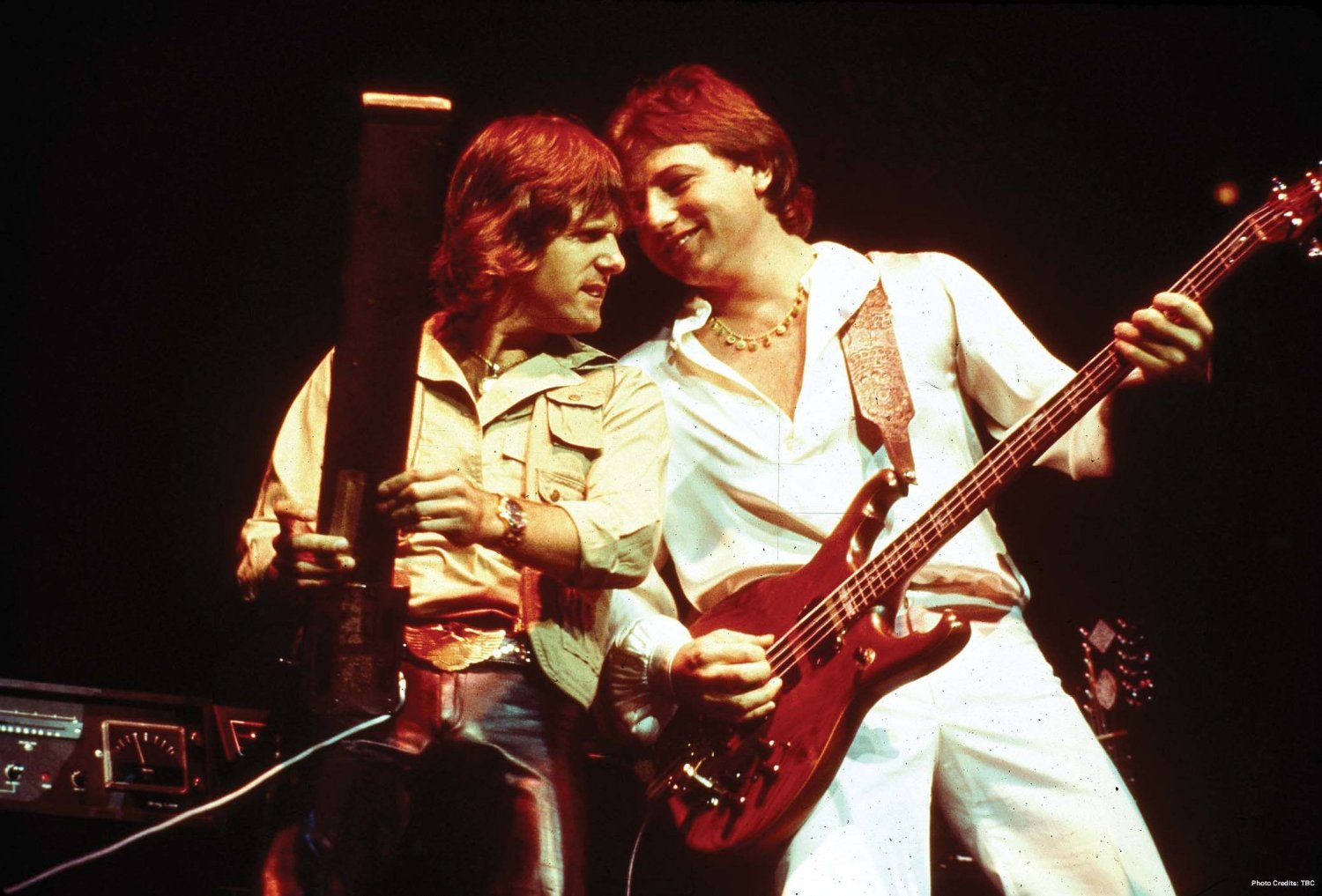 |
| Lake with Keith Emerson, who died this past March |
Though I knew he was a great singer, it was only as I got
older that truly recognized how expertly and uniquely Greg filled his role in
the band. Both Emerson and Palmer were classically trained musicians, both with
dazzling technique. Greg's bass playing, on the other hand, was agile, but
consciously avoided the pyrotechnics that were a hallmark of many of his
colleagues. It would be a cliché and uncomplimentary to say that his playing
"grounded" the trio, and moreover it would be inaccurate. Though on
some of the faster pieces his bass lines could be a tad simplistic, his playing
was, more often than not, elegant and melodic, and instrumentally added the
same lyricism that his voice provided. (The fact that he was recruited to play
bass on "Real Good Looking Boy," the first single by The Who after
the death of John Entwistle is no small praise.)
Still, I believe it will always come back to his songwriting
and his voice. Working within a genre known for its high-mindedness and
bombast, he provided the delicate touches that gave the music its dynamics.
While prog rock was known as music of the head, he wrote the melodies and words
that kept the feeling of the music from moving too far from the heart. Moreover,
as producer of all of ELP's albums during their 1970s heyday (and, it has been
said, handling the majority of the work on the group-produced debut by King
Crimson), he showed a talent for creating albums that balanced all of the
band's disparate elements. In a group that was pulling in more directions than
it had members, it seemed that, for a time, he could find the balance in
imbalance.
A couple years after that night on the door room floor, that
same friend and I went to see ELP at the Harbor Lights Pavilion in Boston. The
show was delayed by what seemed like hours, and a wiring malfunction caused a
small fire onstage (actually in the Hammond organ that Keith was going to use
for the finale) resulting in an interruption of the show right in the middle of
"Tarkus." However, the band was so well oiled and powerful that, in
spite of these things, we did not leave disappointed. Greg's voice had lowered
by this time into a deeper baritone sound, that was so expressive and rich,
that his high notes were not missed. The band seemed to have plenty of life
still in them.
It was not be, of course. They band broke up again the
following year, only to reunite for a one-off festival performance in 2010.
Because of this, I am glad for that night in the dormitory when my friend
pulled out his book of CDs and indoctrinated me with his favorite music. If I
had gotten into ELP a couple of years later, I probably never would have seen
them perform. So while I am sad, I have nothing to regret.
So once again I'm dwelling on how 2016 has done a hell of a
job of taking away pieces of my childhood. Greg's death came as quite a shock,
as I had no idea he ill. The fact that he was a part of so much of the music
that made up my late adolescence and still listen to today makes his passing
stand out for me even among the so many others that have passed this year. So
in spite of the fact that 2016 has been a confusing year, hopefully artistry and lyricism will be
Greg Lake's epitaph.
(The prog rock geeks will get that last reference.)


